“Scientific name” search results (500)

Introduction of coffee bean producing area manor in Indonesia Lhasuna Wahana Village, Lindong producing area of Sumatra Island
It is customary to call coffee from Sumatra Mantenin, which is neither scientific nor confusing. The coffee produced by the Batak people in Lake Toba or the Lindong Mountains in north-central Sumatra is mostly grown without shade, and is mainly treated by half-sun or sun treatment, with obvious herbal flavor and soil flavor, and low acidity and muggy aroma, which is the most important feature of Mantenin coffee.
2016-07-12 Indonesia coffee beans producing areas manors introductions Sumatra Lindong Lassu
What is Robusta Coffee?
Robusta is one of the most important coffee tree species in the world. Robusta (Coffee Robusta Linden). A leaf rust tolerant variety found in Congo, Africa, is more resistant than Arabica varieties. In the general coffee market, many people like to compare Robusta and Arabica coffee beans, which is incorrect. In fact, the Robusta provenance
2014-09-27 Coffee knowledge Coffee varieties Robusta
Boutique Coffee the basic concept of coffee that must be known about coffee
First, know coffee 1, what is coffee (scientific name: Coffea arabica) also known as coffee tree, Arabica coffee, etc., is the national flower of Yemen. Before the 6th century AD, Yemen was called Arabian, so the coffee trees shipped from them to other places were also called Arabian coffee trees. The name coffee comes from the Arabic Qahwah, which means plant drink.
2015-01-17 Boutique coffee must know basic concepts understanding what is scientific name Cof
Flavor and taste of Arabica Coffee Manor Coffee beans from Bali, Indonesia
Arabica coffee is one of the most important coffee trees in the world. Arabica species (scientific name Coffee Arabica). The origin of Arabica species is Ethiopia's Abyssinia Plateau (present-day Ethiopian Plateau). In the early days, it was mainly used as medicine, and the habit of baking and drinking was developed in the 13th century. through Arabia in the 16th century
2016-07-21 Rabbi Coffee Manor producing area Flavor Taste introduction Indonesia Bali
Arabica Coffee, the World's most wanted Coffee Variety, Arabica Coffee Manor
One of the most important coffee trees in the world. Arabica species (scientific name Coffee Arabica). The origin of Arabica species is Ethiopia's Abyssinia Plateau (present-day Ethiopian Plateau). In the early days, it was mainly used as medicine, and in the 13th century it developed the habit of baking and drinking. It was introduced into Europe through the Arab world in the 16th century.
2016-07-19 World want Coffee Variety Rabbi introduction Manor Lord
Coffee Prophet David Schomer David Hume Coffee Pioneer
David Hume (David Schomer) graduated from the University of Washington in Cultural Anthropology (bachelors degree in cultural anthropology from the University of Washington) and holds a degree in classical flute and modern art from the Cornish School of Art. David Hume worked as an engineer for Boeing aircraft Manufacturing Company and American Air.
2016-05-31 Coffee Prophet David Schomer Hume Pioneer Big
The basic knowledge of coffee beans the origin of coffee coffee practice
The origin of Arabica species is the Abyssinia Plateau of Ethiopia (now the Ethiopian Plateau). In the early days, it was mainly eaten as medicine (Islamic couples used it as a secret medicine to cure body and mind or to awaken the brain). It developed the habit of baking and drinking in the 13th century and was introduced into Europe through the Arab region in the 16th century. It has become a favorite drink all over the world.
2016-05-27 Coffee beans basic knowledge coffee origin practice rabbi species Ethiopia
Introduction of coffee flavor description and taste varieties of Santa Barara Manor in Honduras
Honduras national flower carnation (carnation family), carnation (scientific name: Dianthus caryophyllus) namely carnation, also known as lion head carnation, musk carnation, carnation, Dutch carnation. It is a plant of Caryophyllaceae and Dianthus. It is distributed in temperate zone of Europe and Chinese mainland in Fujian and Hubei. It is native to the Mediterranean region and is one of the most widely used flowers in the world. Kang
2016-10-06 Whole Taste Rich Honduras Sanba Lara Manor Coffee Flavor description
How to grow Arabica coffee beans, one of the most important coffee trees in the world?
Arabica species (scientific name CoffeeArabica). The origin of Arabica species is Ethiopia's Abyssinia Plateau (present-day Ethiopian Plateau). In the early days, it was mainly used as medicine, and in the 13th century it developed the habit of baking and drinking. It was introduced into Europe through the Arab world in the 16th century and further became a favorite drink all over the world.
2016-04-06 The most important thing in the world coffee tree species one rabbi tree coffee beans pull
Introduction of Fine Coffee from Coffee Flavor Variety in Lazimus Manor, Colombia
Arabica species (scientific name Coffee Arabica) have to be mentioned in Colombian coffee species. Arabica coffee trees grow between 900m and 2000 m above sea level; they are hardy, and the suitable growth temperature is 1524 ℃; they need more humidity, and the annual rainfall is not less than 1500 ml. At the same time, they also require higher cultivation techniques and conditions. So you can handle it now.
2016-09-24 Columbia Raz Moss Manor Coffee Flavor Variety producing area characteristics essence
How to tell the robusta coffee beans? What does Luo Dou look like?
The first chapter of the Coffee Taste Collection, the basic knowledge of coffee beans, the first section, the three native species of coffee. 2. Robusta species (scientific name Coffee Robusta Linden). P8 (Note p8, which indicates page 8, is annotated in many places). Robusta coffee beans are generally used for instant solution because they extract twice as much coffee liquid as Arabica. Caffeine content 3
2015-11-10 Robes Booth coffee beans how to distinguish Luo Douchang what does it look like
Espresso Vivance David Hume Coffee Information Italian coffee machine brewing ESPRESSO
Espresso Vivance coffee shop owner David Hume David Hume (David Schomer) graduated from the University of Washington in Cultural Anthropology (bachelors degree in cultural anthropology from the University of Washington) and holds a degree in classical flute and modern art from the Cornish School of Art.
2016-04-25 Espresso Vivance David Hume Coffee Information Italy
Robusta Coffee Grind Characteristics Variety Producing Area Taste Treatment Fine Coffee Bean Introduction
Robusta accounts for 25% to 35% of coffee bean production and is mainly produced in Indonesia (one of the varieties produced is a water-washed coffee bean, a hybrid of Robusta and Arabica, the only coffee bean on the Chinese market that can be drunk as a single product), Vietnam, Africa (Ivory Coast, Nigeria, Angola)
2016-10-14 Robbs Booth Coffee Ground Characteristics Variety Region Taste Treatment Fine
Introduction to the flavor and taste characteristics of Indonesian Mantenin coffee beans with bright sour flavor
It is customary to call coffee from Sumatra Mantenin, which is neither scientific nor confusing. The coffee produced by the Batak people in Lake Toba or the Lindong Mountains in north-central Sumatra is mostly grown without shade, and is mainly treated by half-sun or sun treatment, with obvious herbal flavor and soil flavor, and low acidity and muggy aroma, which is the most important feature of Mantenin coffee.
2016-07-13 Aroma relatively bright Niemann Tenin coffee beans flavor taste characteristics introduction
Content of polyphenols in coffee beans
The technology includes two processing steps: the first step is to use water extraction technology to extract polyphenols from raw coffee beans and dissolve them in water, and the second step is to roast raw coffee beans with excessive polyphenols in an almost vacuum condition. spray a high concentration of polyphenol aqueous solution before ending baking, thus greatly increasing the polyphenols in roasted coffee beans.
2014-08-15 Coffee knowledge coffee bean polyphenol content coffee bean composition
Patented technology increases the content of polyphenols in roasted coffee beans
According to foreign reports: applied Food Science Company (Applied Food Science Inc.) has obtained a patent, the patented technology can greatly increase the content of polyphenols in roasted coffee beans.
2014-07-22 Coffee news patents roasted coffee phenols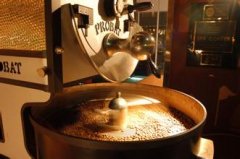
Patented technology increases the content of polyphenols in roasted coffee beans
The technology includes two processing steps: the first step is to use water extraction technology to extract and dissolve the polyphenols in raw coffee beans, and the second step is to roast the coffee beans with excessive polyphenols in almost vacuum. Spray high concentration of polyphenols aqueous solution before ending baking, thus greatly increasing the polyphenols in roasted coffee beans.
2015-04-14 Patented technology addition roasting coffee beans medium polyphenols substances content technology
Patented technology increases the content of polyphenols in roasted coffee beans
The technology includes two processing steps: the first step is to use water extraction technology to extract and dissolve the polyphenols in raw coffee beans, and the second step is to roast the coffee beans with excessive polyphenols in almost vacuum. Spray high concentration of polyphenols aqueous solution before ending baking, thus greatly increasing the polyphenols in roasted coffee beans.
2015-10-27 Patented technology addition roasting coffee beans medium polyphenols substances content technology
Patented coffee roasting technology increases the content of polyphenols in roasted coffee beans
The technology includes two processing steps: the first step is to use water extraction technology to extract and dissolve the polyphenols in raw coffee beans, and the second step is to roast the coffee beans with excessive polyphenols in almost vacuum. Spray high concentration of polyphenols aqueous solution before ending baking, thus greatly increasing the polyphenols in roasted coffee beans.
2015-01-27 Coffee roasting patented technology addition coffee beans in polyphenols substances
The most scientific guide for the purchase and preservation of coffee beans, see here! Guidelines for the preservation of coffee beans
Still buying ground coffee powder? Are you scared when you see the coffee beans on the shelf? I can't drink it all at once when I buy it home. How can I keep it? Drink good coffee, start with buying and using beans! The purchase and storage of coffee beans has always been a difficult task to explain clearly in words, but try to explain it to you today: 1. What should I pay attention to when buying coffee and ripe beans?
2016-01-06 The most scientific learned coffee beans buy save guide here still buy mill okay